
Why January Is the Best Time to Prioritize Your Health? January isn’t just a new month—it’s a reset button for your body and your mindset. Here’s why starting your health journey now makes the biggest impact.

Learn the key differences between TRT and natural testosterone boosting, including benefits, risks, and how to choose the right approach for low testosterone.

Discover why your energy and hormones dip in winter and learn practical tips to naturally support testosterone and overall hormone health.

Believe it or Not, Testosterone Plays a Role in Women's Health Too
HRT, ED and Weight Loss Q&A with and Expert
Live Testosterone Q&A with Brandon Addison - TRT and HRT Expert

What does the science say about Marietta Weight Loss with Semaglutide

Why enclomiphene citrate is our alternative to HCG for patients on Testosterone Therapy.
Is Testosterone Replacement Therapy Holistic or Natural

The HCG Diet is complete BS and this video explains why.
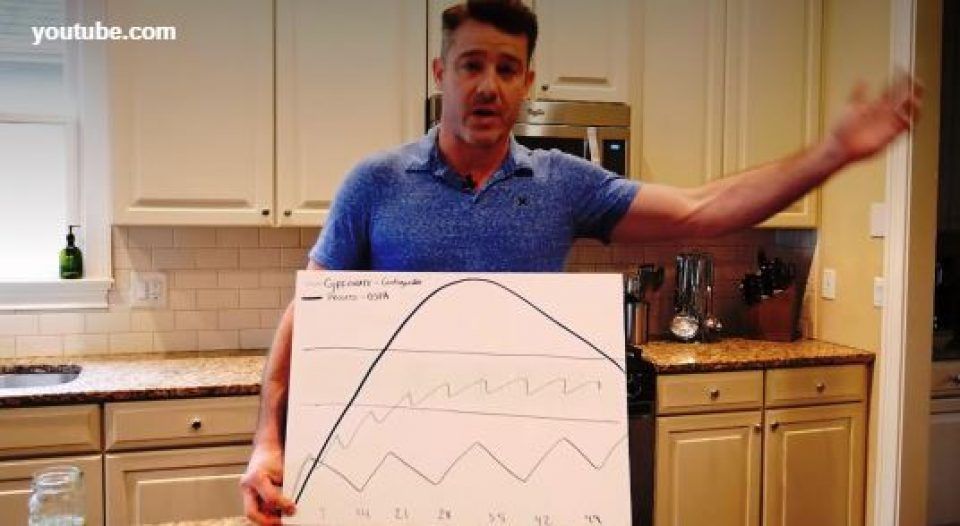
Testosterone can be delivered using many delivery platforms. Injections, pellets, creams, gels, and patches are the most commonly used delivery methods. There are definite benefits and drawbacks to each and we are going to evaluate them for you here. First, let’s talk about using testosterone pellets. The pellets are implanted into the subcutaneous dermal layer, typically in the upper hip area. This approach is very limiting for a few reasons. First, it’s a one size fits all approach. They are dosed by body weight and BMI calculations and leave no room for individualizing a patients levels based on his own natural, optimal level. Another limitation is that the pellets bleed heavily early on after implantation, then fall well below optimal levels. This below optimal state is constant until pellets are implanted again around four to six months from the previous insertion date. This roller coaster is exhausting and can sometimes be harder on the patient that being at a consistently low testosterone level, simply because of the consistency of the state of being. Below is a chart showing three different dosages of testosterone pellets over six months. You can see that if your levels repeated this up and down every six months, it would be quite a ride.
This is a letter we have just received from the wife of a new client who thinks that we are Atlanta’s best hormone replacement program. Hope you enjoy!! My husband and I met in college through mutual friends. We were both very athletic and active, which is what drew me to him initially. We married two short years after meeting and began a family shortly after. I really felt like I had everything I’d ever wanted. About 5 years later I noticed that a month or two would go by without a single intimate event, but when I brought it up John dismissed it citing stress as the main contributor. Even more concerning was the changes I noticed in John’s* personality, he no longer wanted to be active with me and was beginning to put on weight. I knew he was stressed out from his job so I tried not to make it worse by pressing the issue, however everything coupled with his indifference to it all began a drive a wedge between us. I just missed the man I married. One day I was having lunch with an old college girlfriend of mine and I began to confide in her the issues John and I were having and she immediately recommended that we go to your place that had helped her husband resolve his low testosterone issues. She vouched that you guys were indeed Atlanta’s best hormone replacement program. John doesn’t have low t I thought to myself, but then again I guess we really didn’t know, had he been checked recently? As she began to go down the list of symptoms, I felt as though she reading a synopsis of my life for the last 2 years, I couldn’t believe how well it described John’s characteristics as of late. It was the first time in a long time that I had new hope for our marriage. So naturally, I rushed home, tidied up a bit and began to prepare one of his favorite meals in order to set the tone for a very important discussion. I wanted to make sure I presented this as an opportunity for healing and not as me adding on one more problem we needed to fix. To my surprise, he was very receptive and almost appreciative of my dedication to better our marriage. We opened the laptop to “Low T Nation’s” page and after reviewing the Testosterone Replacement Blog as well as the rest of the site together for several minutes we made an appointment online for the following week. The appointment at your clinic could not have gone any smoother. Everything was so perfectly explained to us, and we left knowing what went wrong and how to go about fixing it. Fast-forward three months after starting treatment and I feel like I have my husband back (you might even say my boyfriend back for that matter). Yet more importantly, I was shocked to learn of what could have happened to John if his low T was left untreated, we were at risk of losing a lot more than our marriage. He could have likely developed prostate cancer, diabetes or even heart issues. Thank You Low T Nation for healing my John and our relationship, as well as truly being a partner throughout this whole process. Barbara ***********

7 questions you should your testosterone replacement doctor before starting your program

Estrogen management for men on testosterone replacement is absolutely critical to long term health. Research is showing that estrogen levels are extremely correlated to heart disease. This study shows that both high and low estrogen levels are almost equally dangerous when it comes to heart disease. High estrogen levels are also associated with increased blood clot and strokes and increased mortality. Not to mention, all of the other obvious estrogen dominant side effects like weight gain, gynecomastia, sexual dysfunction, poor moods, and more. Low estrogen also causes more than just cardiovascular disease. Osteoporosis is a very serious issue in men with lower than normal estrogen levels. So much so that this study proves a 650% increase in broken hips in research groups of men with the lowest estrogen levels as compared to men with healthy levels of testosterone. The mortality rates for men with broken hips and severe osteoporosis is also much higher than men with who do not suffer from these conditions. Quality of life is also extremely improved when men have better bone health in their later years. Another vital aspect of managing estrogen involves keeping estrogen optimal in order to avoid the decrease in androgen receptors due to estrogen dominance. This has been proven in several studies and will decrease the body’s ability to bind to DHT and testosterone adequately. Higher levels of estrogen have also been shown to increase SHBG which will in turn drastically reduce free testosterone levels. This is just one more reason that your doctor must understand that keeping you in the optimal range of 20-30 pg/ml has a profound impact on your long term cardiovascular health, your bone health, your testosterone levels (and androgen receptor count) as well as moods and emotional state of being. The importance of managing estrogen cannot be overstated.

Hey folks! Check out our visit to Atlanta and Company today to discuss Low Testosterone and Men’s health topics. Thanks to Atlanta and Company for allowing us the time today to hang out discuss Low T issues that men need to hear. For more information on Low T and other men’s health issues, please check out the rest of our website!

Testosterone replacement management starts and ends with understanding the Hypothalamic, Pituitary, Testicular axis, the HPTA. This is the fundamental supply and demand system that manages men’s testosterone and sperm levels in their bodies. Understanding this axis is crucial in determining whether a man’s testosterone deficiencies are from primary or secondary hypogonadism. This will in turn affect how to properly diagnose and prescribe that patient. Without understanding the give and take involved in the hormone production, a doctor will either usually over prescribe, under prescribe or simply leave out the very vital co-travelers necessary to optimizing a man’s hormonal health. Watch this video on our Low T Nation youtube channel to learn the basics about how a man’s hormones are monitored and stimulated when needed. Also, how and when to add HCG and Clomid to ensure all testicular health and function processes are kept intact and healthy.

Why Testosterone Replacement with HCG is a must to ensure long term postive results.
http://www.harvardprostateknowledge.org/a-harvard-expert-shares-his-thoughts-on-testosterone-replacement-therapy Testosterone’s impact on brain, bone, and muscle Cherrier MM, Asthana MD, Plymate S, et al. Testosterone Supplementation Improves Spatial and Verbal Memory in Healthy Older Men. Neurology 2001;57:80–88. PMID: 11445632. Isidori AM, Giannetta E, Greco EA, et al. Effects of Testosterone on Body Composition, Bone Metabolism and Serum Lipid Profile in Middle-aged Men: A Meta-analysis. Clinical Endocrinology2005;63:280–93. PMID:16117815. Liu PY, Swerdloff RS, Veldhuis JD. Clinical Review 171: The Rationale, Efficacy and Safety of Androgen Therapy in Older Men: Future Research and Current Practice Recommendations.Journal of Clinical Endocrinology and Metabolism 2004; 89:4789–96. PMID: 15472164. Moffat SD, Zonderman AB, Metter EJ, et al. Longitudinal Assessment of Serum Free Testosterone Concentration Predicts Memory Performance and Cognitive Status in Elderly Men.Journal of Clinical Endocrinology and Metabolism 2002;87:5001–7. PMID: 12414864. Wang C, Cunningham G, Dobs A, et al. Long-term Testosterone Gel (AndroGel) Treatment Maintains Beneficial Effects on Sexual Function and Mood, Lean and Fat Mass, and Bone Mineral Density in Hypogonadal Men. Journal of Clinical Endocrinology and Metabolism2004;89:2085–98. PMID: 15126525.

Testosterone replacement costs vary widely vary widely, You need to understand where the hidden costs of the treatments are. Check out the video for more information. Make sure you listen to this video in order to understand costs of deductibles, office co-pays, pharmacy co-pays, lab splits, as well as time and energy spent on getting all of the various pieces together.
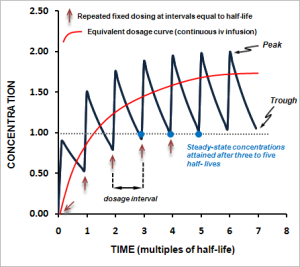
At Low T Nation, we get asked all the time about which platform to deliver testosterone in a Low T program is the best. The most available and common testosterone replacement platforms are creams, pellets, injections, and patches. The best answer depends a lot on the person’s situation, but without any additional determining criteria, we at Low T Nation, prefer the injection based platform for a few reasons. The primary reason is that we know exactly how much testosterone a patient is getting in their system. All of the other systems have a bit of room for error in understanding exact dosing. The pellets have a time released mechanism that distributes the testosterone over months. The creams can have evaporation and absorption issues to contend with. The patches also become increasingly hard to tell exactly how much has been absorbed and how much is still in the patch. There are also other issues. Creams have two additional drawbacks. First being that there are known contact dangers. It is very easy to pass the testosterone (even if the cream has been absorbed) to another person, hopefully not a wife or child. The creams are also completely bio-available which means they have to be applied every day and on top of that, if you miss a day or two, you will feel down in the dumps again. We don’t like the daily use and potential for normalizing back to pre-plan testosterone levels. The pellets tend to raise a patients testosterone levels to a level that is above the intended range far too often. This usually ends up causing issues with estrogen and DHT conversion at too high of a rate as compared to other delivery methods. The testosterone release also shows up like a bell curve with the pellets releasing quickly while the pellets are fairly new, then slowing dramatically as they age. The other issue with pellets is that the patient is usually either feeling better each day because of the increase or worse each day because of the falling levels of testosterone. This therapy method for Low T is still a viable option for men with certain extenuating circumstances such as deployment or constant travel though. With all of these issues, using injections and a testosterone formulation called cypionate,we can reduce any issues with complete loss of testosterone, with contact issues, with high levels and steep falls in serum levels. The half life of testosterone cypionate is about one week. This means that each week when it’s time for your shot, you still have half of last week’s injection, a quarter of the previous week’s, an eight of that weeks previous week and so on. This also eliminates the daily administration requirements of the cream based therapy. The graph below shows exactly how the the buildup levels off after about 5-6 weeks.